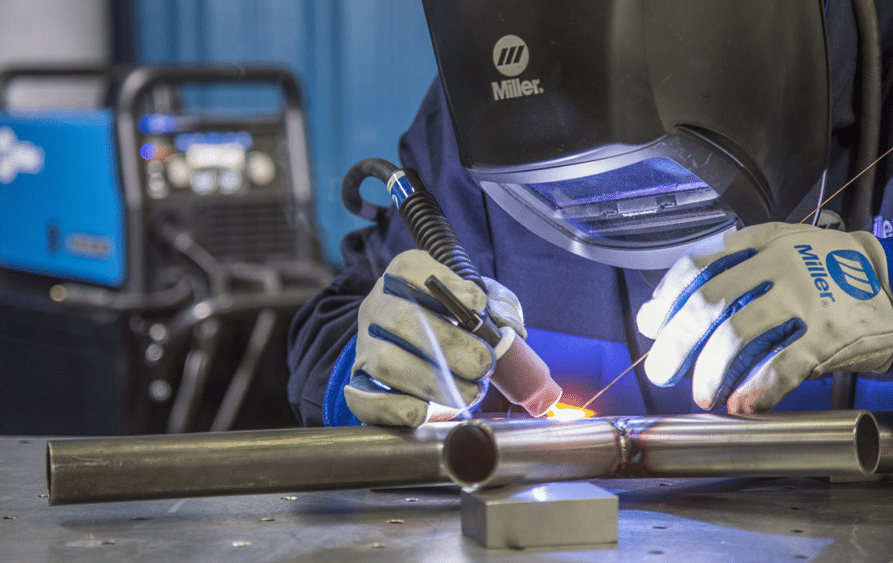
Metal Inert Gas (MIG) and Tungsten Inert Gas (TIG) are two popular welding methods that use an electric arc to join metal. MIG welding is faster and easier to learn because it uses a continuous wire feed, making it highly efficient. TIG welding offers greater precision and control, as it requires the operator to manually feed a filler rod.
The Mechanics and Benefits of MIG Welding
MIG welding, technically known as Gas Metal Arc Welding (GMAW), is widely considered the workhorse of the fabrication industry. It is designed for efficiency and high productivity.
Ease of Use and Speed
MIG welding is often affectionately called the “point and shoot” method. Because the welding machine automatically feeds the consumable wire electrode through the gun, the operator only needs to focus on directing the weld pool. This continuous feed mechanism allows for rapid welding speeds and long, uninterrupted passes. Beginners usually find MIG much easier to master compared to other techniques because it requires less manual coordination.
Common Industry Applications
Due to its impressive speed, MIG is heavily utilized in manufacturing, structural steel work, and automotive repair. It works exceptionally well on thicker materials like carbon steel, stainless steel, and thick aluminum plates. High-volume production shops rely heavily on this process to keep assembly lines moving efficiently. The ability to lay down a lot of weld metal quickly makes it the standard choice for heavy-duty fabrication.
See also: Fashion Product Developer and Tech Designers
The Art and Precision of TIG Welding
TIG welding, or Gas Tungsten Arc Welding (GTAW), is a highly specialized process that prioritizes quality and aesthetics over speed.
Unmatched Precision and Control
TIG welding demands a high level of skill. The operator typically uses a foot pedal to control the electrical amperage and heat output on the fly. Simultaneously, they must guide the tungsten torch with one hand and dab a separate filler metal rod into the weld pool with the other. This requires significant hand-eye coordination. However, that precise heat control prevents burn-through, making it the perfect choice for joining very thin sheets of metal.
Aesthetic Finishes
When a weld needs to look completely flawless, TIG is the undisputed champion. It produces clean, visually appealing joints that often require little to no grinding or finishing after the fact. A high-quality TIG joint often resembles a neat stack of dimes. You will frequently see this method utilized on exposed custom motorcycle frames, aerospace components, and sanitary stainless steel piping in the food and beverage industry.
Comparing Equipment, Gases, and Electrodes
To fully grasp which method suits your shop, you need to look at the physical components required to run these processes.
Equipment Requirements
MIG machines are generally simpler in their operation. A standard setup includes a constant voltage power source, an internal wire drive system, and a spool of welding wire. TIG machines are more mechanically complex. They feature high-frequency start capabilities to initiate the arc without touching the metal, and they require external foot pedals or hand controls to manage the amperage during the weld.
Shielding Gases
Both methods require a shielding gas to protect the molten weld pool from oxygen and atmospheric contamination. Without this gas, the welds would become porous and brittle. MIG typically uses a specific mixture of argon and carbon dioxide, depending on the thickness and type of the base metal. TIG almost exclusively relies on 100% pure argon to maintain a stable arc and protect the delicate tungsten electrode from oxidizing.
Consumable vs. Non-Consumable Electrodes
The biggest mechanical difference lies in the electrode itself. MIG uses a consumable wire. As the arc strikes, that wire continuously melts into the joint to become the actual filler metal. TIG uses a non-consumable tungsten electrode. The tungsten only exists to carry the electric current and create the arc. If the joint requires extra metal to close a gap, the operator must introduce a separate filler rod manually.
Cost-Benefit Analysis for Your Shop
Project scale and operator skill dictate the true cost of each welding method. MIG welding equipment is generally less expensive to purchase and maintain. Furthermore, the high speed of the process drastically reduces labor costs on large-scale projects. If you are running a high-volume fabrication shop that also offers press brake services, MIG will likely be your primary joining method to keep parts moving rapidly from the forming stage to final assembly.
TIG welding requires a steeper initial investment. The machines cost more, and the process is significantly slower, meaning fewer parts are completed per hour. Paying a highly skilled TIG welder also increases baseline labor expenses. However, the resulting welds are incredibly strong and visually perfect. This level of quality is vital for high-end or specialized projects where structural integrity and aesthetics completely supersede production speed.
Conclusion
Selecting the right welding process depends entirely on what you are trying to achieve and the materials you are working with. If you need to join thick steel plates quickly, repair heavy machinery, or are just learning how to weld for the first time, MIG is the obvious choice. It provides strong, reliable joints with a very approachable learning curve.